Value Compact Tractor Shootout: Kioti CK3520 vs Kubota L2501 vs TYM T394
For small acreage owners seeking maximum tractor capability per dollar spent, the compact segment offers three distinct value pathways. The Kioti CK3520 (built in South Korea by Daedong) is the specification powerhouse, delivering standard dual rear hydraulic remotes, twin hydrostatic pedals, a heavy 2,700-pound steel chassis, and over 1,600 pounds of loader lift capacity for thousands less than tier-one competitors. The TYM T394 (powered by Yanmar or Kukje diesels) offers the lowest upfront purchase price and aggressive standard features including telescopic hitch links and third-function valve options. However, the Kubota Standard L (L2501 and L3902) remains the undisputed gold standard for long-term ownership: while commanding a 10 to 15 percent price premium with fewer standard factory features, Kubota delivers bulletproof in-house Japanese engineering, the highest resale retention in the industry, and an unmatched dealer network ensuring immediate parts availability.
This field report is an operational deep dive within our Head-to-Head Benchmark Battles & Brand Rivalries series. For the foundational engineering formulas and sizing benchmarks, read our primary pillar guide: The 800+ HP Monster Tractor Battle: John Deere 9RX 830 vs Case IH Steiger 715 Quadtrac vs CLAAS Xerion 12.650 .
table_chart Benchmark Specifications by Horsepower Tier
| Model | Engine HP | PTO HP | Hydraulic Flow | Hitch Lift | Primary Application |
|---|---|---|---|---|---|
| Kubota L3902 (Premium Compact Benchmark) | 37.5 HP Kubota 1.8L 3-cylinder Diesel | 30.5 PTO HP at 540 RPM | 9.4 GPM open-center gear pump | 1,985 lbs at 24 inches behind hitch | Buyers prioritizing highest secondary resale value, refined controls, and immediate dealer parts support |
| Kubota BX23S (Sub-Compact Economy Benchmark) | 21.6 HP Mechanical D902 Diesel | 17.7 PTO HP at 540 RPM | 6.2 GPM dual pump flow | 680 lbs loader pin lift, 1,936 lbs backhoe force | Comparing value compact specs against an established sub-compact baseline |
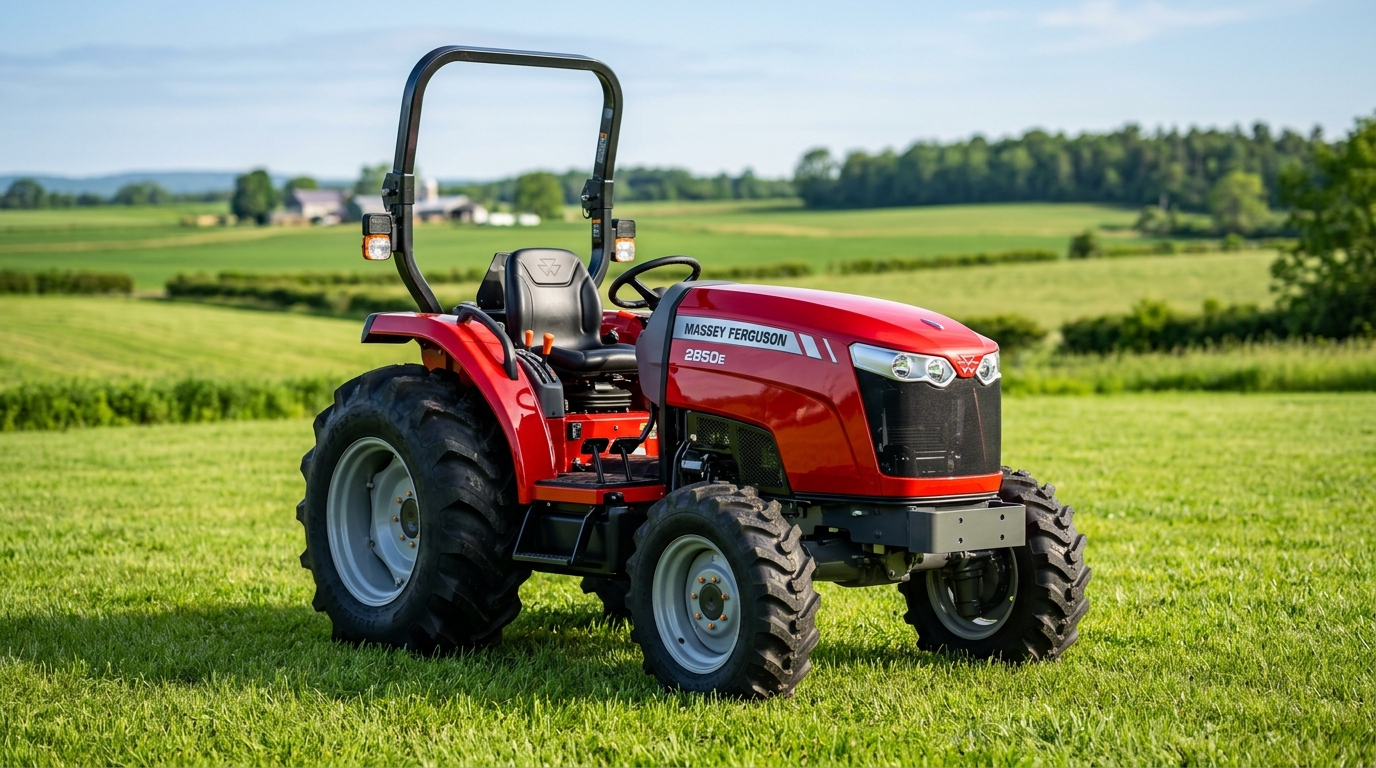
| Massey Ferguson 2850E (Heavyweight Value Utility) | 48.8 HP Iseki 4-cylinder Turbocharged | 41.4 PTO HP at 540 RPM | 12.4 GPM combined hydraulic flow | 3,483 lbs rear three-point lift capacity | Buyers wanting commercial heavy utility lifting capacity and steel durability at a value tier price point |
| John Deere 1025R (Lifestyle Market Benchmark) | 23.9 HP Yanmar 3-cylinder Diesel | 17.2 PTO HP at 540 RPM | 6.3 GPM hydraulic flow | 758 lbs loader lift at pin | Measuring value compact price points against premium residential sub-compact offerings |
1. The Rise of South Korean Compacts: Daedong (Kioti) and TYM Engineering
2. Front-End Loader Shootout: Lift to Full Height vs Breakout Force
3. Hydraulic Flow Architecture: Steering Pump Independence and Cycle Speeds
4. Operator Controls: Twin Touch vs Treadle vs Side-by-Side Dual Pedals
5. Dealer Proximity: The Hidden Cost of Driving Two Hours for a Fan Belt
6. Five-Year Resale Value: Do Initial Savings Evaporate at Trade-In Time?
Equipment Buyer's Verification Checklist
Value Compact Tractor Pre-Purchase Evaluation Checklist
- check_box_outline_blank Compare out-the-door package pricing with identical skid-steer quick-attach (SSQA) loader buckets
- check_box_outline_blank Verify standard factory equipment: check for dual rear remotes, tilt steering, and linked HST pedals
- check_box_outline_blank Test drive hydrostatic foot pedals: compare side-by-side dual pedals against single treadle pedals
- check_box_outline_blank Measure distance to nearest authorized servicing dealership for warranty claims and routine filters
- check_box_outline_blank Inspect hydraulic pump output: verify separate dedicated power steering pump to prevent steering shudder
- check_box_outline_blank Check loader lift capacity at bucket center (500mm forward of pins) for real-world load ratings
- check_box_outline_blank Review warranty coverage: confirm whether powertrain warranty requires certified dealer fluid servicing
- check_box_outline_blank Examine local used market listings: evaluate regional resale demand for Kioti and TYM compared to Kubota
Companion Field Evaluations in This Series
Explore related laboratory evaluations and implement matching guides published within the Head-to-Head Benchmark Battles & Brand Rivalries cluster:
A physical test comparison between the two best-selling sub-compact tractors in North America: Kubota BX23S vs John Deere 1025R. C...
help_outline Frequently Asked Questions
Are Kioti tractors reliable compared to Kubota?
Yes. Kioti tractors are manufactured in South Korea by Daedong Corporation, an industrial diesel manufacturer with over 75 years of powertrain history. Kioti uses heavy cast-iron chassis, in-house Daedong diesel engines, and heavy-duty front axles. Mechanically, they are exceptionally reliable and routinely log thousands of trouble-free operating hours.
Why are Kioti and TYM tractors cheaper than Kubota and John Deere?
South Korean manufacturers maintain lower domestic labor and manufacturing costs, operate with smaller corporate marketing budgets, and choose to include standard features (like rear hydraulic remotes and tilt steering) directly at the factory rather than selling them as high-margin dealer accessories. In addition, Kubota and John Deere command a premium price based on brand prestige and vast dealer support networks.
Can I use standard three-point implements on a Kioti or TYM tractor?
Yes. All modern compact tractors conform to standard Category 1 three-point hitch geometry under ISO 730 regulations. Any standard Category 1 implement (rotary cutters, box blades, tillers, post hole diggers) will attach seamlessly to Kioti, TYM, Kubota, or John Deere hitches.
What is the biggest downside of buying a TYM or Kioti tractor?
The biggest downside is dealer network proximity and secondary resale value. If your nearest dealer is an hour or two away, obtaining specialized warranty service or proprietary electronic parts can be inconvenient. In addition, value brands experience steeper percentage depreciation on the used private market compared to Kubota and John Deere.
Specialist with All About Tractors, focusing on agricultural powertrain performance, implement geometry, and field test diagnostics. All specifications cross-referenced with certified manufacturer technical sheets.