Used vs New Tractor Total Cost of Ownership: 5-Year Depreciation, Maintenance & Resale Analysis
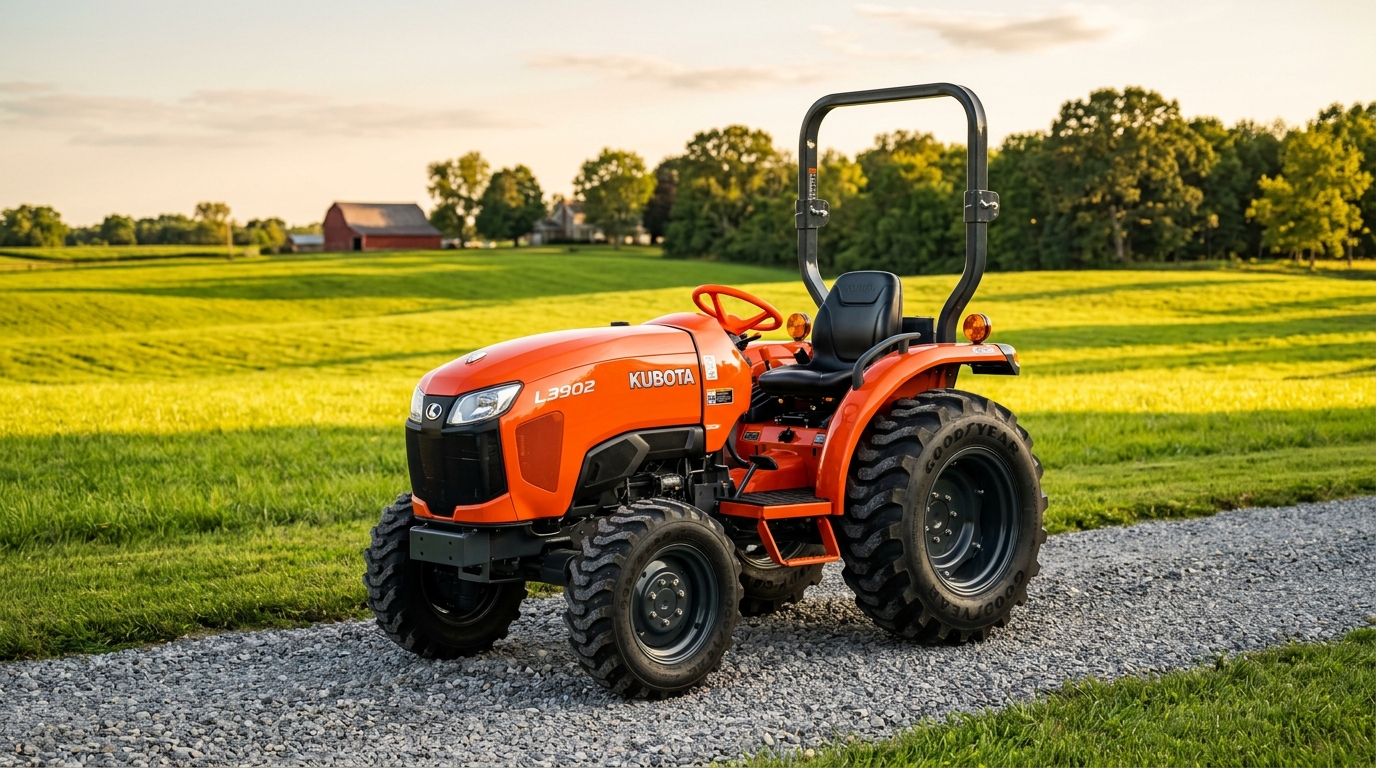
Evaluating whether to purchase a new or used tractor requires looking beyond the initial sticker price to compute 5-Year Total Cost of Ownership (TCO). A new tractor commands a higher initial price tag but delivers predictable operating costs protected by a comprehensive 2-year to 6-year factory warranty, zero accumulated component fatigue, and low-interest promotional financing. However, new machines suffer the steepest depreciation hit (losing 20 to 28 percent of their retail value within the first three years). A clean, well-maintained used tractor (5 to 12 years old) has already moved past its steep initial depreciation curve, losing only 2 to 4 percent of its value annually. However, used buyers must budget for unexpected mechanical failures (hydraulic pumps, injection systems, clutch replacements, and tire wear) that can cost 3,000 to 10,000 dollars, along with the catastrophic economic cost of equipment downtime during tight planting or haying weather windows.
This field report is an operational deep dive within our Pre-Purchase Forensics, Used Hours & Inspection series. For the foundational engineering formulas and sizing benchmarks, read our primary pillar guide: The 25-Point Used Tractor Pre-Purchase Inspection Checklist (2025-2026 Guide) .
table_chart Benchmark Specifications by Horsepower Tier
| Model | Engine HP | PTO HP | Hydraulic Flow | Hitch Lift | Primary Application |
|---|---|---|---|---|---|
| Kubota L3902 (New Tractor Benchmark Profile) | 37.5 HP Compact Utility (New) | Purchase price: $31,000 to $35,000 (New with loader) | Warranty coverage: 2-year bumper-to-bumper, 6-year powertrain | 5-year projected depreciation: 22% total loss | Property owners requiring zero repair downtime, predictable budgeting, and factory warranty backing |
| John Deere 7810 (Legendary Pre-Emissions Used Benchmark) | 175 HP Heavy Row Crop (Built 1997-2003) | Used market price: $65,000 to $85,000 (at 4,500 hours) | Depreciation rate: Near 0% (holding or appreciating in value) | Mechanical reliability: Simple mechanical Bosch inline injection, zero DPF/DEF | Row-crop farmers prioritizing bulletproof pre-emissions mechanical durability over new dealer warranties |
| Massey Ferguson 240 (Low-Cost Vintage Utility Workhorse) | 46 HP Perkins Diesel (Built 1980-1999) | Used market price: $7,500 to $12,500 | Parts availability: Inexpensive aftermarket components widely available | Maintenance cost: Ultra-low basic fluid and filter servicing | Hobby farms and chore operations seeking minimum capital investment and easy DIY wrenching |
| Fendt 724 Gen 7 (High-Tech Precision Enterprise Benchmark) | 243 rated HP Advanced AgTech | Purchase price: $280,000+ new retail | Comprehensive telematics: Fendt Connect predictive maintenance monitoring | High residual value: Fendt Vario stepless drives retain premium trade-in margins | Commercial enterprises where fuel savings and digital auto-steering justify new capital costs |
1. The Total Cost of Ownership Formula: Purchase Price, Depreciation, Repairs, and Downtime
2. Depreciation Curves: The 3-Year Drop vs The 10-Year Value Plateau
3. Factory Warranty Valuation: Why One Blown Hydrostatic Transmission Changes the Math
4. The True Cost of Downtime: How a Broken Tractor at Haying Costs 15,000 Dollars
5. Tier 4 Emissions Realities: DPF Replacements vs Pre-Emissions Used Machinery
6. Resale Liquidity: Which Tractor Brands Hold Maximum Resale Value
Equipment Buyer's Verification Checklist
Used vs New Tractor Purchase Decision Checklist
- check_box_outline_blank Calculate anticipated annual operating hours: over 300 hours/year favors new equipment reliability
- check_box_outline_blank Assess financial cost of downtime: determine whether delayed chores result in direct crop or revenue loss
- check_box_outline_blank Audit mechanical repair skills: evaluate DIY mechanical capability versus relying on dealership service labor
- check_box_outline_blank Compare factory warranty coverage terms (distinguish between comprehensive and powertrain-only limits)
- check_box_outline_blank Inspect used candidate for pre-emissions mechanical simplicity (prioritize pre-2012 non-DPF engines if buying used)
- check_box_outline_blank Obtain complete dealership service history printout and oil analysis lab reports for used candidates
- check_box_outline_blank Calculate 5-year projected depreciation using historical market auction sales data on comparable models
- check_box_outline_blank Verify local dealer parts availability and field service technician dispatch proximity for both options
help_outline Frequently Asked Questions
At what annual operating hours does buying a new tractor make financial sense?
If you operate a tractor for more than 250 to 300 engine hours per year in revenue-critical tasks (commercial haying, vegetable production, livestock feeding, or snow removal contracts), purchasing a new tractor with full warranty protection is generally more economical than risking unscheduled repair downtime. For casual property maintenance under 75 hours per year, a clean used tractor delivers vastly superior cost per hour.
Why do 20-year-old tractors sometimes cost as much as newer used models?
Pre-emissions diesel tractors manufactured before EPA Tier 4 Final regulations (prior to 2012-2014) feature simple mechanical fuel injection systems without electronic ECUs, wiring harnesses, DPF soot filters, or DEF fluid. Because they can be maintained indefinitely with basic hand tools and never experience computer derate limp-mode shutdowns, commercial farmers pay premium prices to acquire clean pre-emissions machinery.
What is the average annual maintenance cost for a compact tractor?
For a standard compact tractor operated 100 hours per year, routine annual maintenance (engine oil and filter, fuel filters, hydraulic filters, air filters, chassis grease, and coolant testing) costs between 250 and 450 dollars in DIY supplies, or 600 to 1,000 dollars if serviced by an authorized dealership mobile service truck.
How much does a front-end loader add to a tractor resale value?
A factory front-end loader adds immense value: on the used market, a compact tractor equipped with a quick-attach loader sells for 4,000 to 6,000 dollars more than an identical bare tractor, and sells approximately four times faster. A tractor without a loader is difficult to resell because 90 percent of rural property buyers require loader capability.
Specialist with All About Tractors, focusing on agricultural powertrain performance, implement geometry, and field test diagnostics. All specifications cross-referenced with certified manufacturer technical sheets.