Tractor Hydraulic Systems Explained: Open Center vs Closed Center (PFC) & Remote Valves
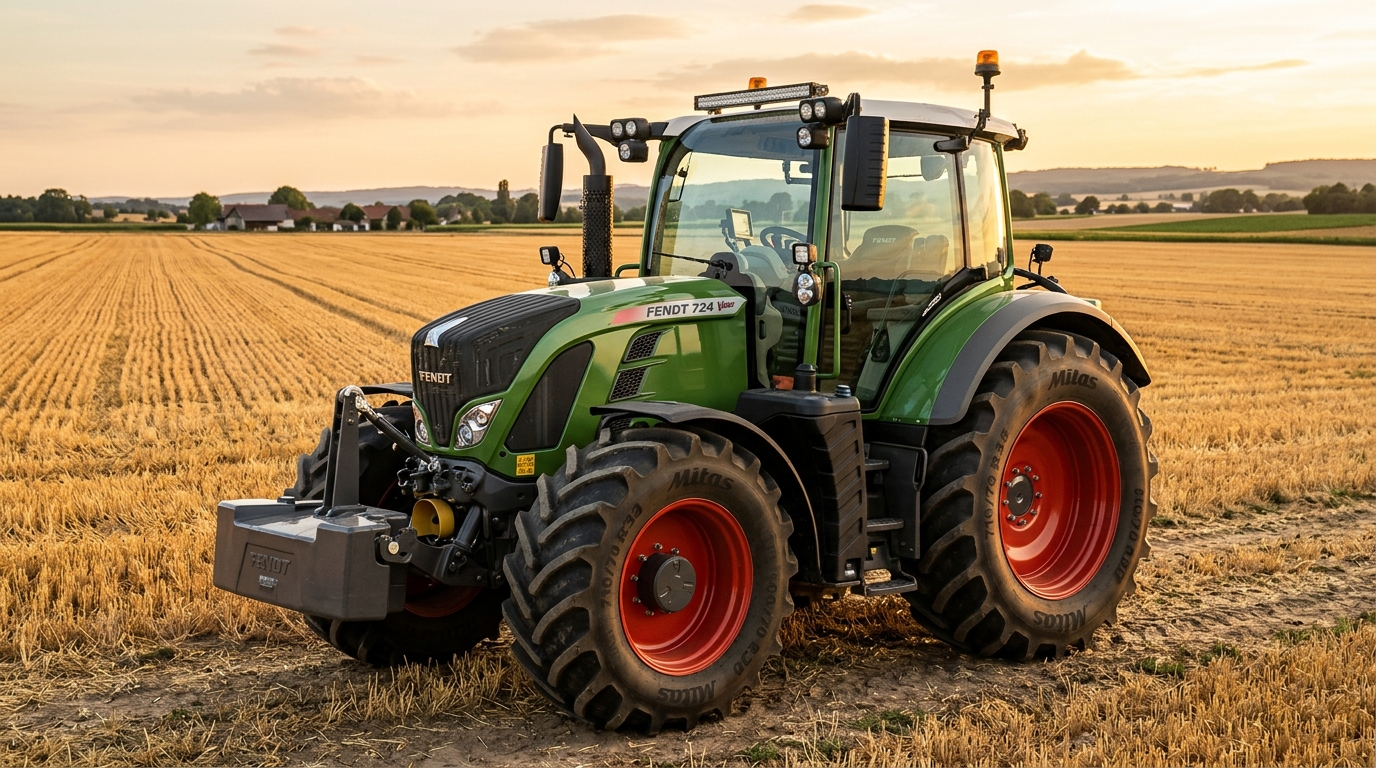
Tractor hydraulic systems are divided into two fundamental operational designs: Open Center and Closed Center. In an Open Center system (standard on sub-compact, compact, and utility tractors up to 100 horsepower), a fixed-displacement gear pump continuously circulates a constant volume of oil through open spool valve passages and directly back to the reservoir at low pressure whenever no controls are being moved. Operating an implement shifts a valve spool to block the open center passage, directing pressurized oil to the cylinder. In a Closed Center Pressure-Flow Compensating (PFC) system (standard on commercial row-crop and high-horsepower tractors), a variable-displacement axial piston pump features a swashplate that adjusts displacement on demand. When valves are in neutral, the pump destrokes to near-zero flow while maintaining standby pressure (typically 3,000 psi). When an operator moves an electro-hydraulic remote valve or runs a continuous planter vacuum motor, the pump swashplate angles instantly to deliver only the exact volume of oil demanded by the load, dramatically reducing parasitic engine drag and preventing hydraulic fluid overheating.
This field report is an operational deep dive within our Mechanical Forensics, Drivetrain & Diagnostics series. For the foundational engineering formulas and sizing benchmarks, read our primary pillar guide: Tractor Transmission Types Explained: Hydrostatic vs Gear vs PowerShift vs CVT .
table_chart Benchmark Specifications by Horsepower Tier
| Model | Engine HP | PTO HP | Hydraulic Flow | Hitch Lift | Primary Application |
|---|---|---|---|---|---|
| Fendt 724 Gen 7 (Load-Sensing PFC Axial Piston) | 243 rated HP Advanced Utility | Pump architecture: Axial piston load-sensing PFC pump | Hydraulic pump capacity: 58 GPM (220 LPM) | System operating pressure: 200 bar (2,900 psi) | Operating continuous hydraulic orbital motors, slurry injectors, and precision air seeders |
| John Deere 8400R e23 (Dual-Pump Closed-Center Flagship) | 400 rated HP Row Crop Prime Mover | Pump architecture: Dual-pump closed-center PFC circuit | Total hydraulic flow: 85 GPM (321 LPM) | Electro-hydraulic selective control valves: Up to 6 rear SCVs | Simultaneous operation of high-volume hydraulic planter fans, downforce cylinders, and bulk fill seeders |
| Case IH Farmall 75A (Open-Center Tandem Gear Pump) | 74 HP Heavy Utility | Pump architecture: Fixed-displacement external gear pump | Total flow: 16.9 GPM (11.9 GPM implement + 5.0 GPM steering) | System pressure: 2,750 psi (190 bar) | Durable, low-cost front loader cycling and mechanical three-point hitch implement operation |
| Kubota L3902 (Open-Center Compact Workhorse) | 37.5 HP Compact Utility | Pump architecture: Dual open-center gear pumps | Total flow: 9.4 GPM (6.3 GPM implement + 3.1 GPM steering) | System relief pressure: 2,420 psi | Simple, reliable property maintenance, box blading, and light loader chores without complex electronics |
1. Open Center Systems: How Fixed-Displacement Gear Pumps Circulate Oil
2. Closed Center PFC: Variable-Displacement Axial Pistons and Swashplates
3. Parasitic Horsepower Loss: Why Open Center Pumps Overheat on Continuous Motors
4. Power Beyond Architecture: Routing Pressurized Oil to Loaders and Backhoes
5. Selective Control Valves (SCVs): Float Detents, Continuous Flow, and Timers
6. Pressure vs Flow: Measuring Relief Valve Cracking Pressures with a Gauge
Equipment Buyer's Verification Checklist
Tractor Hydraulic System Inspection and Diagnostics Checklist
- check_box_outline_blank Identify your tractor hydraulic architecture: verify open-center gear pump vs closed-center PFC axial piston
- check_box_outline_blank Check hydraulic fluid level on dipstick or sight glass with all loader and hitch cylinders fully retracted
- check_box_outline_blank Inspect hydraulic oil for clarity: milky fluid indicates water contamination; dark brown indicates heat breakdown
- check_box_outline_blank Examine suction line rubber hoses between reservoir and pump: verify hose clamps are tight to prevent air cavitation
- check_box_outline_blank Test main relief valve cracking pressure using a 0 to 5,000 psi test gauge connected to a rear remote coupler
- check_box_outline_blank Ensure front-end loader joystick valve includes proper Power Beyond sleeve when feeding rear backhoe circuits
- check_box_outline_blank Verify float position engagement on loader and rear remote levers for ground-contour following implements
- check_box_outline_blank Clean external hydraulic oil cooler radiator fins to prevent fluid overheating during heavy summer operations
help_outline Frequently Asked Questions
What is the difference between open center and closed center hydraulics?
In an open-center system, a fixed-displacement gear pump pushes a constant volume of oil continuously; when control valves are in neutral, oil flows through an open passage back to the tank at low pressure. In a closed-center system, a variable-displacement axial piston pump maintains high standby pressure against closed valves; when controls are neutral, the pump destrokes to near-zero flow, pumping only when an active load demands fluid.
Why does my tractor hydraulic fluid get boiling hot when running an auger motor?
This happens when running a continuous hydraulic motor on an open-center tractor without a dedicated motor valve. If your fixed-displacement pump produces 12 GPM, but your motor only uses 7 GPM, the remaining 5 GPM of pressurized fluid is continuously forced through an internal relief valve or restriction. This restriction converts excess hydraulic pressure directly into heat, rapidly overheating the fluid.
What does the float position do on a tractor hydraulic valve?
Float position opens both sides of a hydraulic cylinder directly to the fluid reservoir, eliminating hydraulic lock. This allows the cylinder to extend and retract freely, permitting implements like snow blades, rotary cutters, and box blades to float up and down over uneven ground contours without digging into the soil.
What is Power Beyond on a compact tractor?
Power Beyond is a specialized ported sleeve installed in an open-center valve (such as a loader joystick valve) that separates high-pressure working oil from low-pressure exhaust oil. It allows pressurized fluid to pass downstream in series to secondary attachments like backhoes or log splitters without pressurizing valve tank passages, which would blow internal seals.
Specialist with All About Tractors, focusing on agricultural powertrain performance, implement geometry, and field test diagnostics. All specifications cross-referenced with certified manufacturer technical sheets.