Tractor Financing vs Cash vs Leasing: Section 179 Depreciation Rules & 0% APR Traps
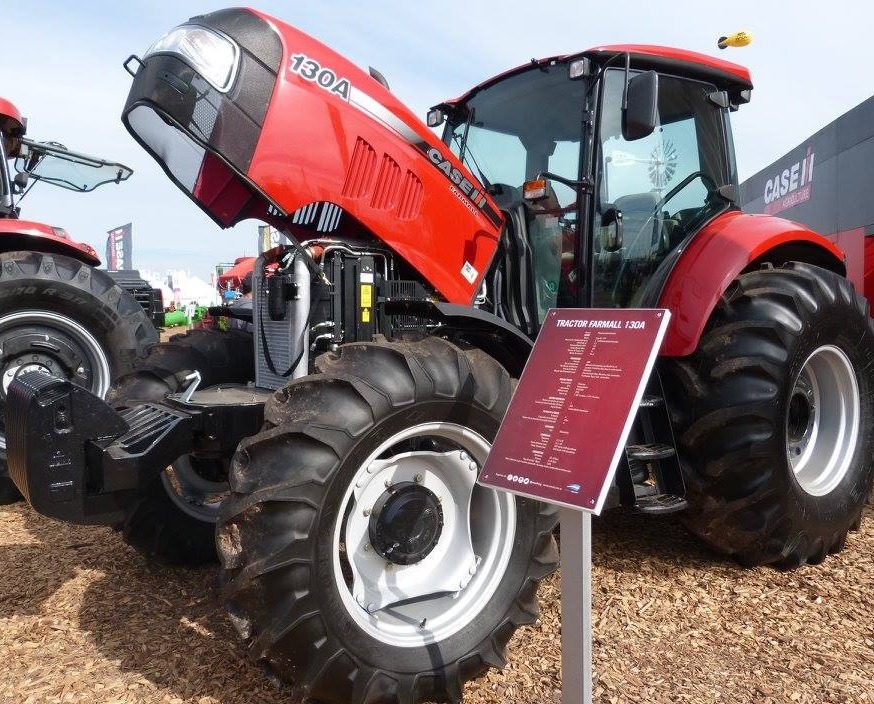
Acquiring a tractor involves balancing upfront capital preservation, borrowing costs, and agricultural tax optimization. While manufacturer 0% APR promotional financing appears attractive, dealers almost always package this loan with a higher equipment retail price by withholding cash-in-lieu rebates (often 2,000 to 5,000 dollars on compact tractors and over 15,000 dollars on large row-crop machines). For profitable agricultural producers, IRS Section 179 allows writing off 100 percent of the purchase price of qualifying new and used farm equipment placed in service during the tax year (up to the federal annual cap, exceeding 1.2 million dollars), creating massive immediate tax savings. Commercial operating leases provide lower monthly payments and eliminate residual market risk for high-hour operators who turn over machines every three to five years, but cash or low-interest equipment loans build equity and preserve long-term asset value.
This field report is an operational deep dive within our Pre-Purchase Forensics, Used Hours & Inspection series. For the foundational engineering formulas and sizing benchmarks, read our primary pillar guide: The 25-Point Used Tractor Pre-Purchase Inspection Checklist (2025-2026 Guide) .
table_chart Benchmark Specifications by Horsepower Tier
| Model | Engine HP | PTO HP | Hydraulic Flow | Hitch Lift | Primary Application |
|---|---|---|---|---|---|
| Case IH Farmall 75A (Commercial Utility Financing Profile) | 74 HP Heavy Utility | Average retail price: $52,000 to $62,000 with loader | Cash rebate incentive: $3,500 cash-in-lieu discount | Section 179 write-off: Up to 100% of purchase price in Year 1 | Mid-size livestock farms balancing cash flow with first-year capital equipment tax write-offs |
| Kubota BX23S (Sub-Compact Consumer Financing Model) | 21.6 HP Sub-Compact | Package retail price: $24,000 to $28,000 with loader/backhoe | KTAC comprehensive insurance integration requirement | 0% APR term options: 60 to 84 months promotional | Hobby farmers and rural homeowners seeking zero-down, low monthly payment ownership |
| John Deere 8400R e23 (Production Row Crop Capital Lease) | 400 HP Production Row Crop | Purchase price: $450,000+ new retail | Commercial operating lease: 3-year / 1,500-hour rollover program | MACRS 7-year accelerated property depreciation | Large grain enterprises requiring predictable hourly machine operating expense and continuous warranty |
| Massey Ferguson 2850E (Value Tier Financing & Rebates) | 48.8 HP Turbo Diesel | Retail price: $36,000 to $42,000 with loader | Low rate APR vs aggressive instant cash back incentives | Section 179 eligibility for custom mowing and haying businesses | Agricultural contractors wanting minimum finance interest with maximum equipment durability |
1. The True Cost of 0% APR: Comparing Subsidized Loans to Cash Rebates
2. IRS Section 179 Expensing: Writing Off 100% of Equipment in Year One
3. MACRS 7-Year Property: Standard Depreciation vs Bonus Depreciation Schedules
4. Farm Equipment Leasing: Operating Leases vs Capital Leases with Buyout Options
5. Mandatory Equipment Physical Damage Insurance: OEM Policies vs Farm Bureau
6. The Acquisition Decision Matrix: When to Pay Cash, Finance, or Sign a Lease
Equipment Buyer's Verification Checklist
Tractor Financing, Lease, and Tax Optimization Checklist
- check_box_outline_blank Compare full retail price with 0% APR against cash price with cash-in-lieu rebates
- check_box_outline_blank Consult your agricultural CPA regarding Section 179 first-year write-off eligibility
- check_box_outline_blank Verify machine delivery and placement in service occurs before December 31st for current tax year eligibility
- check_box_outline_blank Determine whether financing or leasing better aligns with your farm balance sheet debt ratios
- check_box_outline_blank Review lease contract annual hour limits (typically 300 to 500 hours/year) and excess hour penalty fees
- check_box_outline_blank Compare dealer physical damage insurance (KTAC, JDF) against your farm owner policy floater rate
- check_box_outline_blank Audit early loan payoff penalty clauses: ensure loan allows penalty-free early principal reduction
- check_box_outline_blank Confirm implement packages (loader, rotary cutter, trailer) can be bundled into single financing contract
help_outline Frequently Asked Questions
Does a hobby farmer qualify for Section 179 tax deductions on a tractor?
To claim Section 179 on farm equipment, the IRS requires that the machine be used more than 50 percent of the time in an active business or agricultural enterprise conducted for profit (reported on Schedule C or Schedule F). If your property is purely a residential homestead with no commercial agricultural sales or custom contract revenue, you cannot claim Section 179 expensing.
Is 0% financing always better than paying cash for a tractor?
Not always. Dealerships routinely offer cash-in-lieu discounts ranging from 1,500 to 5,000 dollars on compact tractors for buyers who forgo promotional 0% financing. If the cash rebate discount represents a larger savings than the interest you would pay through a standard 5 percent bank loan or your lost investment interest, paying cash or taking conventional financing is the smarter financial move.
Can I use Section 179 on a used tractor?
Yes. Current IRS tax rules permit Section 179 expensing on both new and used equipment, provided the used machine is newly acquired by your business and has not been previously owned by you or a related entity. This makes buying clean 5-year-old used utility tractors highly tax-efficient.
What happens if I sell a tractor that I wrote off under Section 179?
If you write off 100 percent of a tractor purchase price under Section 179, your adjusted tax basis in the machine becomes zero. When you eventually sell or trade in that tractor, the entire sale price is treated by the IRS as depreciation recapture, which is taxed as ordinary income in the year of the sale.
Specialist with All About Tractors, focusing on agricultural powertrain performance, implement geometry, and field test diagnostics. All specifications cross-referenced with certified manufacturer technical sheets.