Tractor Ballast, Tire Fluid & Wheel Weights: Rim Guard vs Calcium Chloride & Weight Distribution
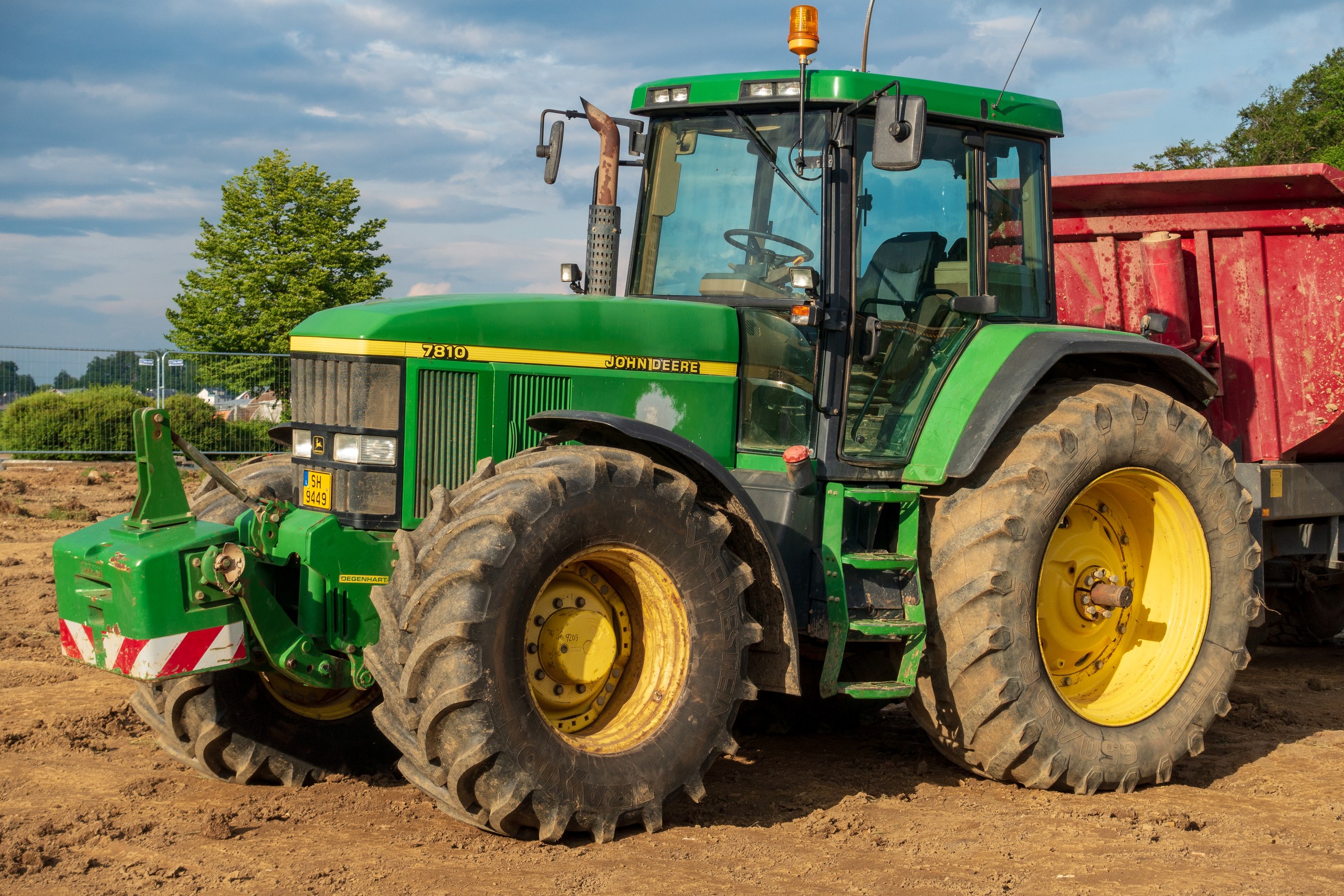
Proper tractor ballasting is essential to achieve maximum draft efficiency, protect drivetrains from power hop, prevent excessive tire wear, and maintain rollover stability during front-end loader operation. For mechanical front-wheel drive (MFWD) tractors, target a static weight distribution of approximately 40 percent on the front axle and 60 percent on the rear axle. For heavy draft tillage, target an operating weight ratio of 110 to 130 pounds per engine horsepower. Liquid tire ballast is the most cost-effective method to anchor rear tires; non-toxic beet juice (Rim Guard) weighs approximately 10.7 to 11.0 pounds per gallon, does not freeze down to minus 35 degrees Fahrenheit, and will not corrode steel rims like traditional calcium chloride. For loader safety, counterweight ballast mounted behind the rear axle on the three-point hitch is mandatory to unload stress from the front axle steering spindles.
table_chart Benchmark Specifications by Horsepower Tier
| Model | Engine HP | PTO HP | Hydraulic Flow | Hitch Lift | Primary Application |
|---|---|---|---|---|---|
| John Deere 7810 (Row Crop Cast Wheel Weights & Front Suitcase Rack) | 175 rated engine HP 8.1L PowerTech | Cast wheel weights: Up to 1,400 lbs per rear wheel | Front suitcase rack: Up to 18 x 100 lb weights (1,800 lbs) | Target operating weight: 19,500 to 22,000 lbs | Heavy moldboard and chisel plowing with balanced 40/60 weight distribution |
| Case IH Puma 185 CVXDrive (Radial Flotation & Axle Ballast) | 185 rated HP 6.7L FPT Diesel | Rear axle cast weights: 550 to 1,100 lbs per side | Hydraulic front hitch counter-weight: 2,200 lb solid block | 12,500 lbs Category 3 hitch capacity | High-draft commercial tillage and preventing power hop on undulating clay soils |
| Kubota L3902 (Compact Utility Liquid Ballast & Ballast Box) | 37.5 HP 3-cylinder Diesel | Liquid tire ballast: 28 gallons Rim Guard per rear tire (~600 lbs total) | Three-point ballast box: 600 to 800 lbs crushed stone or concrete | 1,985 lbs hitch lift, 1,144 lbs loader bucket capacity | Eliminating rear-wheel lift-off and stabilizing front-end loader gravel work |
| Massey Ferguson 2850E (Heavy Cast Utility Chassis) | 48.8 HP Turbo Diesel | Liquid rear tire capacity: 42 gallons per tire (~900 lbs total) | Wheel weights: 100 lb cast segmental rings | 3,483 lbs rear linkage capacity | Safely moving heavy round hay bales and pulling 6-foot heavy rotary tillers |
1. The Physics of Traction: Why Too Little and Too Much Ballast Both Waste Fuel
2. Calculating Wheel Slip Percentage: The 8 to 12 Percent Ideal Range
3. Weight Distribution Ratios: 40/60 MFWD vs 30/70 Two-Wheel Drive
4. Liquid Tire Ballast Showdown: Rim Guard vs Calcium Chloride vs Washer Fluid
5. Cast Wheel Weights vs Three-Point Ballast Boxes: Where Weight Belongs
6. Front-End Loader Safety: Preventing Axle Pivot Cracking and Tip-Overs
Equipment Buyer's Verification Checklist
Tractor Ballasting and Traction Setup Checklist
- check_box_outline_blank Determine your target tractor operating weight based on 110 to 130 lbs per engine horsepower for heavy tillage
- check_box_outline_blank Verify static weight split on platform scale: target 40/60 front-to-rear for MFWD tractors
- check_box_outline_blank Calculate field wheel slip percentage: ensure slip falls within 8 to 12 percent under normal draft load
- check_box_outline_blank Select non-corrosive liquid tire ballast (Rim Guard beet juice) filled to 75 percent rim height
- check_box_outline_blank Avoid calcium chloride in tubeless radial tires to prevent irreversible steel rim corrosion
- check_box_outline_blank Ensure rear three-point ballast box or heavy implement is attached whenever using front-end loader
- check_box_outline_blank Check tire inflation pressure with a low-pressure liquid tire gauge set to manufacturer radial load charts
- check_box_outline_blank Remove unneeded suitcase weights when switching from heavy primary tillage to light mowing to reduce soil compaction
Companion Field Evaluations in This Series
Explore related laboratory evaluations and implement matching guides published within the Implements, Attachments & Hitch Geometry cluster:
A certified agricultural engineering guide to sizing rotary cutters and brush hogs: the rule of 5 PTO horsepower per foot of cut, ...
A technical guide to understanding tractor front end loader lift ratings: why pivot pin numbers mislead buyers, calculating real p...
help_outline Frequently Asked Questions
What is the best liquid to put in tractor tires?
Rim Guard (refined beet juice) is widely considered the best liquid tire ballast. It provides the highest density among non-toxic fluids (10.7 to 11.0 pounds per gallon), resists freezing down to minus 35 degrees Fahrenheit, is completely non-corrosive to steel rims, and poses no environmental hazard to pastures or livestock if a tire is punctured.
Why shouldn't tractor tires be filled 100 percent with liquid?
Tractor tires should only be filled to approximately 75 percent volume (valve stem level at the 12 o'clock position). Liquids cannot be compressed; filling a tire to 100 percent liquid removes the essential air cushion, resulting in an extremely harsh, rigid ride, loss of tire casing deflection, and severe vulnerability to rim cracking or tire blowout when striking rocks.
How much rear ballast do I need for a front-end loader?
As a general engineering rule, the counterweight mounted on your rear three-point hitch should equal or exceed the maximum lift capacity of your front-end loader. For a loader capable of lifting 1,200 pounds, keep at least 800 to 1,200 pounds of rear ballast (via a concrete ballast box, heavy box blade, or backhoe) attached to counterbalance the load and unload the front axle.
What is tractor power hop and how does ballast fix it?
Power hop is a violent, self-sustaining bouncing phenomenon that occurs on mechanical front-wheel drive (MFWD) tractors when pulling heavy draft loads in loose, dry soil. It happens when front and rear tires alternate between losing and regaining traction. Power hop is eliminated by adjusting front-to-rear ballast ratios (typically adding front suitcase weights) and fine-tuning radial tire inflation pressures according to tire manufacturer field load tables.
Specialist with All About Tractors, focusing on agricultural powertrain performance, implement geometry, and field test diagnostics. All specifications cross-referenced with certified manufacturer technical sheets.