Tractor Backhoe Attachment Buying Guide: Subframe Mounts vs 3-Point Hitch & Hydraulic GPM
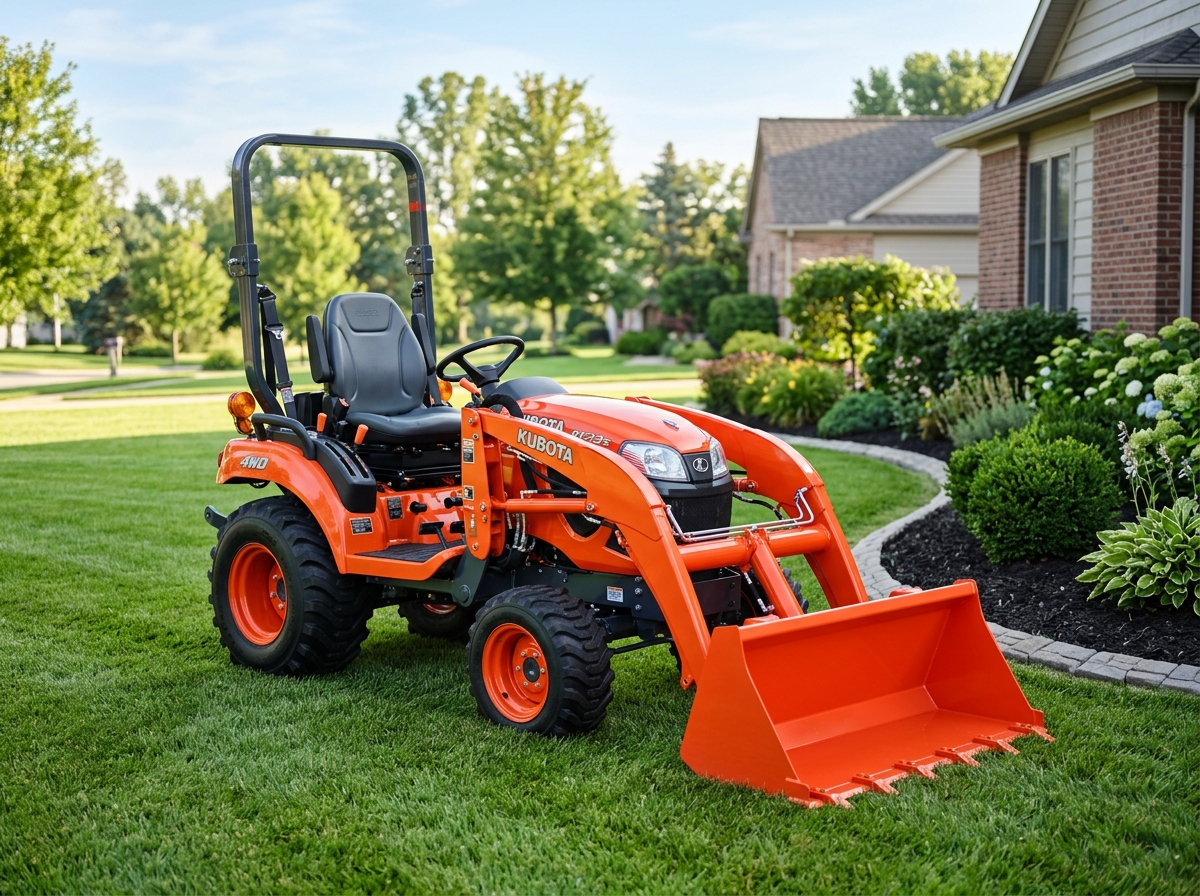
A backhoe attachment turns a compact or utility tractor into a versatile excavation machine for trenching water lines, planting trees, digging footings, and prying out rocks. However, how the backhoe mounts to the tractor is the single most critical structural decision you will make. A three-point hitch mounted backhoe channels thousands of pounds of prying torque directly through the tractor top link and lower three-point lift arms, creating immense stress that frequently cracks or shatters the tractor cast-iron transmission or differential housing. Conversely, a dedicated subframe backhoe utilizes heavy steel longitudinal ladder rails running beneath the tractor belly, rigidly tying the backhoe mounting frame directly to both the rear axle casting and the front loader subframe. Always choose a subframe mount for any digging work.
table_chart Benchmark Specifications by Horsepower Tier
| Model | Engine HP | PTO HP | Hydraulic Flow | Hitch Lift | Primary Application |
|---|---|---|---|---|---|
| Kubota BX23S (Factory BT603 Subframe Backhoe) | 21.6 HP Sub-Compact | Digging depth: 6 feet 1 inch (73.2 inches) | Bucket cylinder breakout force: 1,936 lbs | Dipperstick digging force: 1,171 lbs | Residential drainage ditches, conduit trenching, and light landscape excavation |
| John Deere 1025R (Quick-Attach 260B Backhoe) | 23.9 HP Sub-Compact | Digging depth: 6 feet 2 inches (74 inches) | Bucket digging force: 2,036 lbs | Hydraulic cycle time: 4.8 seconds swing arc | Trenching around mature tree roots and precision utility pipe placement |
| Kubota L3902 (Commercial-Grade BH77 Subframe Backhoe) | 37.5 HP Compact Utility | Digging depth: 7 feet 7 inches (91.8 inches) | Bucket digging force: 3,421 lbs | Dipperstick digging force: 2,190 lbs | Deep septic lines, frost-line foundation footings, and boulder extraction |
| Massey Ferguson 2850E (Heavy Utility Subframe Backhoe) | 48.8 HP Heavy Utility | Digging depth: 8 feet 6 inches (102 inches) | Bucket breakout force: over 4,200 lbs | High-volume dual hydraulic pump support (12.4 GPM) | Large-scale farm ditching, culvert installation, and heavy commercial land improvement |
1. The Transmission Housing Hazard: Why 3-Point Backhoes Crack Tractor Castings
2. How Subframes Distribute Stress: Connecting Front Loader to Rear Axle
3. Real-World Digging Depth: The 2-Foot Flat Bottom Rule vs Advertised Reach
4. Tractor Hydraulic Remotes vs Dedicated PTO-Driven Hydraulic Pumps
5. Understanding Force: Bucket Breakout Force vs Dipperstick Crowding Force
6. Mechanical Thumbs vs Hydraulic Thumbs: The Essential Material Handling Upgrade
Equipment Buyer's Verification Checklist
Tractor Backhoe Pre-Purchase and Safety Checklist
- check_box_outline_blank Insist on a dedicated steel subframe mounting kit; never install a 3-point hitch mounted backhoe
- check_box_outline_blank Verify actual digging depth using the SAE 2-foot flat bottom trench standard, not maximum touch reach
- check_box_outline_blank Confirm tractor hydraulic pump output matches backhoe valve bank requirements (minimum 6 to 9 GPM)
- check_box_outline_blank Inspect subframe mounting points to ensure brackets do not interfere with mid-mount mower deck linkages
- check_box_outline_blank Choose bucket width based on soil conditions: 12-inch bucket for clay and trenches, 16-inch for loose loam
- check_box_outline_blank Verify backhoe includes wide stance hydraulic stabilizer outriggers with reversible street and dirt pads
- check_box_outline_blank Equip backhoe with a mechanical or hydraulic thumb for handling logs, boulders, and demolition debris
- check_box_outline_blank Always lower stabilizer outriggers and front loader bucket firmly to the ground before operating backhoe controls
Companion Field Evaluations in This Series
Explore related laboratory evaluations and implement matching guides published within the Implements, Attachments & Hitch Geometry cluster:
A certified agricultural engineering guide to sizing rotary cutters and brush hogs: the rule of 5 PTO horsepower per foot of cut, ...
A technical guide to understanding tractor front end loader lift ratings: why pivot pin numbers mislead buyers, calculating real p...
help_outline Frequently Asked Questions
Can I put a backhoe on a tractor without a subframe?
Technically, three-point hitch backhoe adapters exist, but agricultural mechanics strongly advise against them. A three-point backhoe channels intense prying and twisting forces directly into the tractor cast-iron transmission housing and top link mount. Over time, these cyclic shock loads cause stress fractures and shattered transmission cases, resulting in catastrophic repair bills that often exceed the value of the tractor.
How long does it take to remove and attach a modern tractor backhoe?
Modern four-point quick-attach subframe backhoes (such as the Kubota Swift-Tach or John Deere 260B) are designed for single-person removal and attachment in approximately 5 to 10 minutes. The operator drops the stabilizer pads and bucket to support the backhoe, pulls two locking pins, disconnects the hydraulic quick-couplers, and drives the tractor away.
Is a backhoe attachment as powerful as a dedicated mini-excavator?
No. A compact tractor backhoe is an outstanding utility attachment for intermittent farm trenching and landscaping, but a dedicated 1.5 to 3.0 ton mini-excavator delivers 360-degree continuous house rotation, independent boom offset swing, significantly higher hydraulic flow, and tracks that traverse mud far better than wheeled tractors. If you have months of continuous excavation, a mini-excavator is vastly more productive.
What is the difference between a mechanical thumb and a hydraulic thumb?
A mechanical thumb uses a fixed steel strut with adjustment holes that must be pinned manually into position; you then clamp objects by curling the bucket against the rigid thumb. A hydraulic thumb is powered by its own hydraulic cylinder and controlled from the operator joystick, allowing you to grip, manipulate, and release logs, boulders, and pipes dynamically without leaving the seat.
Specialist with All About Tractors, focusing on agricultural powertrain performance, implement geometry, and field test diagnostics. All specifications cross-referenced with certified manufacturer technical sheets.