Best Tractors for Homesteading and Small Acreage: Sizing, Chores & Implements (1-5 Acres)
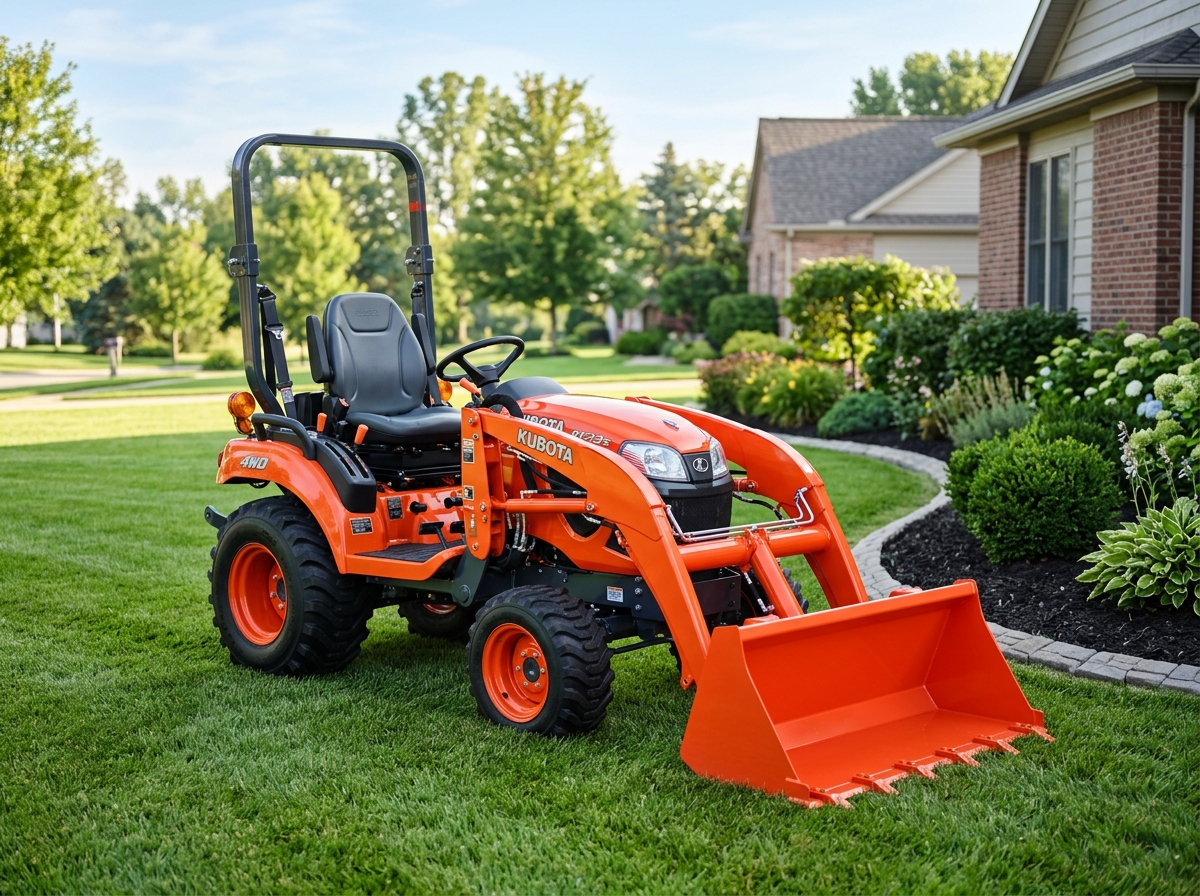
For a 1 to 5 acre homestead, a 22 to 26 horsepower sub-compact or small compact tractor with four-wheel drive and a hydrostatic transmission is the optimal machinery choice. Machines like the Kubota BX23S or John Deere 1025R provide tight maneuverability around garden beds, raised plots, and animal pens while delivering 500 to 750 pounds of loader lift capacity for compost, gravel, and firewood. If your homestead involves heavy land clearing, rocky soil excavation, or lifting full 1,000-pound pallets of animal feed, stepping up to a small chassis compact tractor like the Kubota L2501 or John Deere 3025E provides a heavier frame (2,600+ pounds) and over 1,100 pounds of loader capacity without requiring complex diesel particulate filter (DPF) emissions systems.
This field report is an operational deep dive within our Acreage, Sizing & Property Matching series. For the foundational engineering formulas and sizing benchmarks, read our primary pillar guide: What Size Tractor Do You Need for 5, 10, 20, or 50 Acres? (2025-2026 Practical Guide) .
table_chart Benchmark Specifications by Horsepower Tier
| Model | Engine HP | PTO HP | Hydraulic Flow | Hitch Lift | Primary Application |
|---|---|---|---|---|---|
| Kubota BX23S | 21.6 HP Kubota D902 Diesel | 17.7 PTO HP (540 RPM) | 6.2 GPM (23.5 LPM) dual pump | 680 lbs at pivot pin (505 lbs at 500mm) | 1 to 3 acre homesteads, tight garden layouts, and integrated backhoe trenching |
| John Deere 1025R | 23.9 HP Yanmar 3-cylinder Diesel | 17.2 PTO HP (540 RPM) | 6.3 GPM (24.0 LPM) total flow | 758 lbs at pivot pin (120R Loader) | Manicured lawns, driveway maintenance, and quick-attach AutoConnect mower decks |
| Kubota L3902 | 37.5 HP Kubota Common Rail Diesel | 30.5 PTO HP (540 RPM) | 9.4 GPM (35.6 LPM) open center | 1,985 lbs at 24 inches behind pin | 3 to 5+ acre homesteads with heavy timber, rocky pastures, and round bale handling |
| Massey Ferguson 2850E | 48.8 HP Iseki 4-cylinder Turbo Diesel | 41.4 PTO HP (540 RPM) | 12.4 GPM combined hydraulic flow | 3,483 lbs at 24 inches behind hitch | Large multi-use homesteads requiring heavy pasture reclamation, round bales, and deep subsoiling |
1. The Homestead Chore Profile: Why Lawn Mowers and ATVs Fall Short
2. Sub-Compact vs Small Compact: Frame Weight vs Manicured Turf
3. The Under 25 Horsepower Sweet Spot: Dodging DPF and DEF Systems
4. Loader Lift Capacity and the Realities of the Sub-Compact Backhoe
5. The Essential Homestead Implement Battery: Tiller, Cutter, Box Blade
6. Tire Tread Selection and Liquid Ballast for Small Acreage Safety
Equipment Buyer's Verification Checklist
Homestead Tractor Pre-Purchase Sizing Checklist
- check_box_outline_blank Verify machine fits inside your existing garage, barn doorway, or shed (measure height with ROPS up and folded)
- check_box_outline_blank Determine whether engine is under 25 HP to avoid DPF exhaust soot filter and regeneration cycles
- check_box_outline_blank Confirm loader lift capacity at bucket center (not just pivot pin) exceeds your heaviest anticipated cargo
- check_box_outline_blank Ensure rear three-point hitch is a true Category 1 standard hitch capable of accepting third-party implements
- check_box_outline_blank Inspect hydraulic pump output: minimum 6.0 GPM combined flow for responsive loader and power steering
- check_box_outline_blank Select optimal tire tread: R14 hybrid for mixed lawn and snow, or R4 industrial for puncture resistance in woods
- check_box_outline_blank Confirm rear wheel ballast options: verify dealer can install non-corrosive liquid ballast in rear tires
- check_box_outline_blank Check ease of implement hookup: consider quick-hitch adapters (such as SpeeCo or John Deere iMatch)
help_outline Frequently Asked Questions
Can a 25 HP sub-compact tractor run a round baler?
No. Standard round balers require a minimum of 45 to 60 PTO horsepower and significant tractor weight (at least 4,500 pounds) to maintain control on hills. A 25 HP sub-compact lacks both the mechanical power and the physical chassis mass to operate or safely stop a round baler.
Is a backhoe worth the extra cost on a small acreage homestead?
If you are starting raw raw land and need to trench water pipes, lay electric conduits, dig footings for outbuildings, and clear hundreds of small stumps over multiple months, an integrated backhoe pays for itself in convenience. If your land is already developed and you only have one weekend project, renting a dedicated mini-excavator for 300 dollars a day provides four times the digging speed and digging force.
What is the difference between R1, R4, and R14 tractor tires?
R1 tires feature tall, narrow, aggressive agricultural lugs designed for pulling plows through deep field mud, but they will aggressively tear up lawn turf. R4 tires feature shallow, wide, heavy-duty industrial bars designed for hard surfaces and loader work, resisting punctures but packing up with wet snow or clay. R14 tires are modern hybrid radials combining agricultural traction with turf-friendly lug spacing, delivering excellent traction on snow, ice, and wet grass without chewing up your lawn.
How much rear ballast do I need when using a front-end loader?
As a general engineering rule, your rear counterweight (including liquid tire ballast and rear three-point ballast box or heavy implement) should equal or exceed the maximum lift capacity of your front-end loader. For a loader lifting 800 pounds, maintain at least 600 to 800 pounds of ballast directly mounted behind the rear axle.
Specialist with All About Tractors, focusing on agricultural powertrain performance, implement geometry, and field test diagnostics. All specifications cross-referenced with certified manufacturer technical sheets.