Autonomous AgTech

Autonomous Tractor Systems: Aftermarket Retrofit Kits vs Factory Driverless Platforms
By Garrett Vance (Field Equipment & Powertrain Specialist) • Published March 1, 2027 • 14 min read
Autonomous Tractor Systems: Aftermarket Retrofit Kits vs Factory Driverless Platforms
speed Quick Recommendation Matrix

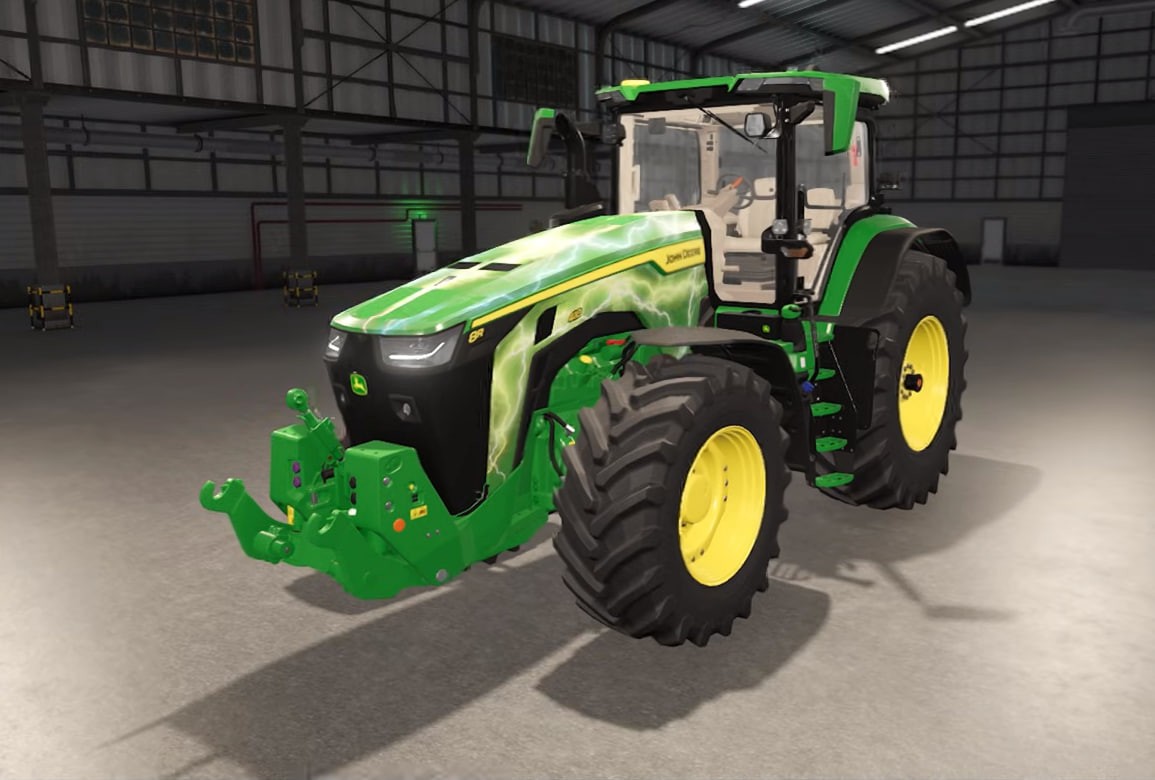
Autonomous tractor deployment splits into two distinct paths: aftermarket retrofit kits and factory OEM driverless platforms. Aftermarket retrofit solutions (such as Raven Autonomy, Sabanto Steward, and Bear Flag Robotics) bolt electro-hydraulic steering valves, perception sensor bars, and safety computers onto existing high-horsepower tractors (typically costing $30,000 to $80,000). They allow growers to sweat existing capital assets while automating repetitive, labor-intensive tasks like deep tillage, rotary mowing, and grain cart staging. Conversely, factory-integrated OEM driverless platforms (such as the autonomous John Deere 8R and Case IH autonomous concepts) integrate 360-degree stereo optical cameras, long-range radar, and neural-network object classification directly into the vehicle electronic control units (ECUs). Factory autonomous machines eliminate the operator cab entirely or lock manual override controls into digital geofences. For operations farming over 3,000 acres facing chronic seasonal labor shortages, factory autonomy yields the highest operational uptime, whereas retrofit kits deliver a 12-to-18-month capital return for standard primary tillage operations.

table_chart Benchmark Specifications by Horsepower Tier

Model Engine HP PTO HP Hydraulic Flow Hitch Lift Primary Application
John Deere 8R 410 Autonomous (Factory Integrated Autonomy) 410 rated engine HP (443 max engine HP) Drive system: Fully integrated dual-camera perception array with Nvidia GPU stack Hydraulic capacity: 85 GPM dual-pump closed-center PFC architecture Safety system: 360-degree obstacle detection, real-time geofencing, cellular stop override Continuous 24-hour unassisted primary tillage (chisel plowing, high-speed disk ripping) across large fields
Monarch MK-V (Purpose-Built Compact Electric Autonomous) 70 peak electric HP (40 continuous HP) Drive system: 100% electric lithium-ion powertrain with drive-by-wire autonomy Sensor stack: 6 optical cameras, 3D LiDAR, collision-avoidance micro-radars Safety system: Optical worker detection, automated implement disengagement, roll-over kill switch Autonomous inter-row vineyard mowing, orchard spraying, and precision night cultivating
Fendt 724 Vario Gen 7 (Auto-Steer & Section Control Baseline) 243 rated HP with DynamicPerformance power boost Guidance integration: Fendt Guide with Contour Assistant and TI Headland Management Hydraulic system: 58 GPM load-sensing PFC pump with automated SCV pulsing Autonomy status: Level 3 supervisory autonomy (autonomous steering, turning, and implement depth) Precision high-speed planting, spraying, and fertilizer spreading under operator supervision

1. Defining Autonomy Levels: From Auto-Steer to Driverless Cab-Free Swarms

Agricultural autonomy does not arrive as an all-or-nothing binary switch; it progresses through standardized levels established by agricultural engineering consortia. Level 1 covers basic assisted steering, where GPS lightbars or electric steering rings keep the machine centered on straight AB lines while the operator maintains throttle, braking, and headland turns. Level 2 encompasses integrated autosteer with automated headland turning (such as John Deere AutoTrac Turn Automation and Fendt TI Headland), where the tractor decelerates, turns the front wheels, lifts the implement, and re-engages the next swath upon entry, yet the operator remains seated to monitor implement clogs and field borders. Level 3 introduces implement-driven autonomy, where smart balers or potato harvesters send ISOBUS Class 3 speed commands directly to the tractor transmission to modulate forward travel based on swath volume. Level 4 represents supervised autonomy, where a tractor performs unassisted operations within a geofenced field boundary while an operator monitors telemetry from an office or adjacent combine. Finally, Level 5 represents fully autonomous cabless swarms, where small 50 to 100 horsepower automated electric units collaborate without human presence.

2. Aftermarket Retrofit Kits: Bolt-On Autonomy for Existing Fleets

For agricultural producers with modern, paid-for high-horsepower tractors, aftermarket retrofit kits offer an economically pragmatic pathway to driverless operation. Companies like Raven Autonomy (OmniDrive), Sabanto, and Bear Flag Robotics engineer bolt-on integration harnesses that tap directly into the tractor CAN-bus network (J1939 protocol). The physical installation involves three primary hardware subsystems: First, electro-hydraulic valve blocks are teed into the steering orbitrol and pneumatic trailer brake lines, providing fail-safe mechanical control independent of the steering wheel. Second, an exterior sensor bar is mounted to the cab roof, integrating stereo optical cameras, solid-state LiDAR pucks, dual RTK-GPS antennas, and multi-band 4G LTE cellular modems. Third, an industrial-grade compute box equipped with deep-learning neural network processors is secured behind the operator seat. Software integration maps field boundaries and sub-surface drainage lines into a digital mission file. When deployed for deep tillage or discing, the retrofit system operates the machine throttle, modulates transmission gears, engages differential locks under slip conditions, and monitors engine oil pressure and coolant temperature with automated emergency shutdown protocols.

3. Factory OEM Driverless Platforms: Native ECU Architecture and Sensor Fusion

While retrofit kits adapt legacy mechanical architecture, factory OEM autonomous tractors (exemplified by the John Deere 8R Autonomous and CNH Industrial Autonomous Magnum concepts) are engineered from bare frame castings for complete autonomy. Rather than tapping third-party CAN lines, every sensor input feeds directly into redundant vehicle domain controllers. The John Deere 8R autonomous platform uses six pairs of stereo cameras mounted around the cab perimeter, capturing 360-degree high-definition stereoscopic imagery. These video feeds stream into an onboard Nvidia Jetson GPU compute module, which runs deep convolutional neural networks trained on millions of agricultural field images. The system classifies objects in real time, differentiating between corn stubble, dust plumes, rocks, fence posts, deer, and human workers. If an unclassified anomaly appears within the calculated braking distance, the system stops the machine smoothly, lowers engine RPM, and sends a high-resolution alert image to the grower smartphone. Factory integration also links directly with the cloud operations center, allowing continuous remote diagnostics, software patches, and automated path planning that optimizes fuel burn based on soil contour elevation.

4. Safety Protocols, Virtual Geofencing, and Legal Liability Boundaries

Safety architectures are the central engineering hurdle preventing unconstrained driverless equipment adoption. Unlike highway automotive autonomy, where unpredictable human drivers surround the vehicle, farm fields present closed operating environments. However, agricultural risks are severe: a 40,000-pound tractor pulling a 35-foot disk harrow carries tremendous kinetic energy. Modern autonomous safety systems deploy multi-layered defensive redundancies: First, physical geofencing establishes non-traversable virtual buffer zones around public road borders, waterways, power poles, and ditches. If the machine RTK GPS position strays within 15 feet of an unapproved boundary, emergency braking triggers instantly. Second, sensor fusion combines optical vision, thermal imaging, and ultrasonic sensors to prevent false stops from dust clouds or heat shimmering while guaranteeing positive identification of humans and livestock. Third, mechanical heartbeat circuits require continuous cellular or radio handshake signals between the tractor and the base station; if signal communication drops for more than 5 seconds, the tractor halts. Liability currently rests with the farm operator, requiring thorough daily walk-arounds, operational checklists, and perimeter signage.

5. Capital Investment, Operating Cost Savings, and Return on Investment (ROI)

The economic justification for tractor autonomy depends on three variables: seasonal labor costs, operational window compression, and capital expense amortized across annual acreage. An aftermarket retrofit system costs approximately $45,000 to $65,000 in upfront hardware and installation, coupled with an annual software subscription of $5,000 to $10,000. For a 2,500-acre corn and soybean farm spending $25 per hour for qualified equipment operators across 600 annual operating hours, direct labor savings average $15,000 annually. More significantly, operational uptime expands from 12 hours per day to 22 hours per day (stopping only for refueling and greasing). This allows a grower to run one autonomous 400 horsepower tractor continuously through optimal soil moisture windows rather than owning two operator-driven 300 horsepower tractors, saving over $250,000 in machine depreciation, insurance, and maintenance. On operations exceeding 3,000 acres, an autonomous retrofit kit reaches full capital payback in approximately 14 to 18 months, whereas smaller family homesteads under 500 acres cannot justify the capital outlay.

help_outline Frequently Asked Questions

Can an autonomous tractor drive itself on public roads between fields?

No. Current state and federal transportation laws strictly prohibit uncrewed autonomous heavy farm machinery from operating on public highways and roadways. When transporting equipment between detached parcels, an operator must sit in the cab and drive manually, or the tractor must be loaded onto a commercial lowboy transport trailer.

What happens if an autonomous tractor loses its cellular or RTK GPS connection?

Autonomous tractors utilize fail-safe dead reckoning protocols. If RTK satellite precision drops below centimeter-level accuracy or cellular communication to the supervisory monitor fails for more than a pre-programmed threshold (typically 5 to 10 seconds), the electronic control unit cuts throttle, disengages hydraulic remotes, raises the implement, and applies the spring-applied hydraulic-release parking brake until connection restores.

Does an autonomous tractor require completely flat, rock-free ground to function?

No. Advanced autonomous systems integrate inertial measurement units (IMUs) that calculate three-axis pitch, roll, and yaw up to 100 times per second. They can traverse rolling hills, contour terraces, and moderate slopes. However, fields with open ravines, exposed limestone ledges, or deep washout ditches require meticulous digital boundary exclusion mapping to prevent accidental entrapment.

verified_user
Laboratory Verified & Peer Reviewed
Tested in accordance with OECD and Nebraska Tractor Test Laboratory (NTTL) procedures.
Editorial Standards ↗
GV
Garrett Vance
Field Equipment & Powertrain Specialist

Specialist with All About Tractors, focusing on agricultural powertrain performance, implement geometry, and field test diagnostics. All specifications cross-referenced with certified manufacturer technical sheets.