Autonomous Ag Robotics: Swarm Farming, AI Laser Weeding & Field Reconnaissance
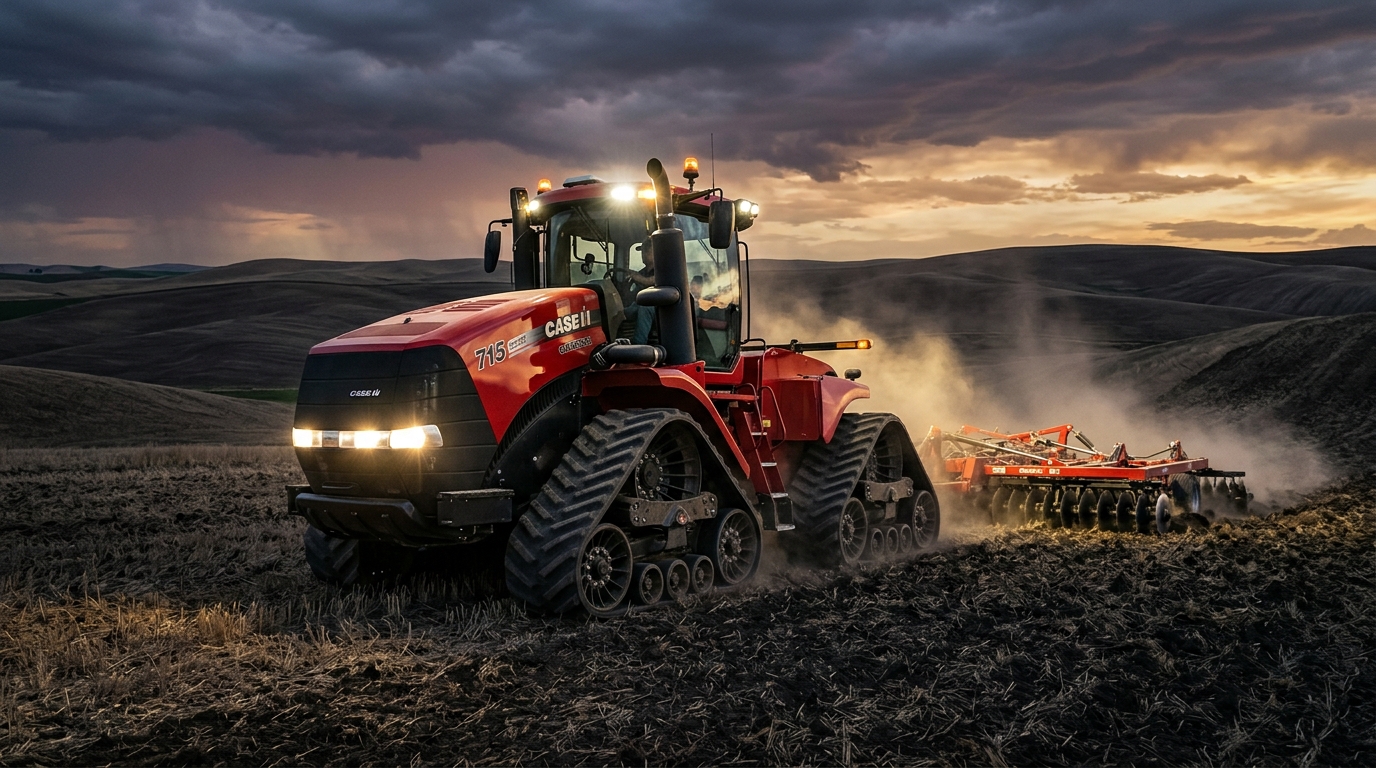
Autonomous agricultural robotics represents a paradigm shift in field mechanization, challenging the century-old agricultural trend toward increasingly massive, high-horsepower single tractors. Instead of deploying a single 40,000-pound, 600-horsepower articulated tractor that causes catastrophic subsoil compaction and requires immense capital investment, swarm farming deploys coordinated fleets of four to eight small, autonomous 50-to-100 horsepower robotic units (such as SwarmFarm Robotics). These lightweight robots collaborate across fields via local wireless mesh networks, executing continuous precision tasks including micro-volume spraying, cover crop planting, and mechanical weeding. In specialty and row crops, artificial intelligence computer vision platforms (exemplified by the Carbon Robotics LaserWeeder) process high-speed stereoscopic imagery using deep neural networks to distinguish crop seedlings from invasive weeds down to the sub-millimeter, firing high-energy pulsed carbon dioxide (CO2) lasers to vaporize weed meristems without touching the soil or disturbing crop roots. By eliminating chemical herbicide resistance, reducing field compaction by over 70 percent, and operating 24 hours per day, agricultural field robotics deliver superior biological soil health and dramatic chemical expenditure reductions.
table_chart Benchmark Specifications by Horsepower Tier
| Model | Engine HP | PTO HP | Hydraulic Flow | Hitch Lift | Primary Application |
|---|---|---|---|---|---|
| SwarmFarm SwarmBot 5 (Modular Autonomous Field Platform) | 83 HP turbo-diesel or hybrid electric powertrain | Navigation stack: RTK GNSS guidance with obstacle detection LiDAR and cellular mesh sync | Implement mounting: Integrated 3-point hitch and universal payload frame for smart boom sprayers | Operating weight: 6,100 lbs unballasted (vs 38,000 lbs conventional tractor) | Swarm-based optical weed spraying, precision mowing, and low-compaction row-crop planting |
| Carbon Robotics LaserWeeder (AI Computer Vision Thermal Platform) | PT300 pull-behind or autonomous self-propelled platform with onboard diesel generator | Perception stack: 36 high-resolution optical cameras feeding 24 Nvidia GPU edge computers | Eradication system: 30 pulsed 150-watt CO2 lasers firing at 200 milliseconds per pulse | Weed eradication speed: Up to 200,000 weeds destroyed per hour at travel speeds up to 5 MPH | High-density specialty vegetable crops (onions, carrots, leafy greens) requiring 100% herbicide-free weed control |
| Case IH Steiger 715 Quadtrac (Traditional Mega-Tractor Benchmark) | 715 rated engine HP (778 peak HP) | Drive system: Articulated 4WD with heavy-duty rubber track drive undercarriage | Hydraulic capacity: 113 GPM dual-pump closed-center PFC architecture | Weight: 61,200 lbs operating chassis weight | High-acreage primary tillage, deep ripping, and pulling 60-foot air seeders across immense flat terrain |
1. The Limits of Agricultural Gigantism: Heavy Machinery vs Subsoil Compaction
2. Swarm Robotics Architecture: Decentralized Fleet Collaboration in Practice
3. Computer Vision and Laser Weeding: Sub-Millimeter Thermal Weed Eradication
4. Herbicide Elimination, Labor Savings, and Economic Payback Analysis
5. Future Field Logistics: Automated Refueling, Battery Swapping, and Farm Docks
help_outline Frequently Asked Questions
Can an agricultural laser weeding robot accidentally burn or damage valuable crops?
Accidental crop damage is extraordinarily rare. Advanced computer vision neural networks operate at sub-millimeter tracking accuracy, precisely mapping the perimeter and apical meristem of both the crop plant and the weed. The steering galvo mirrors only pulse the laser when the target coordinates fall entirely within the weed boundary. If a weed is physically entangled with a crop seedling such that targeting the weed would clip the crop leaf, the system algorithm automatically suppresses the laser firing.
How do lightweight swarm robots pull heavy tillage implements like subsoilers or chisel plows?
They do not. The philosophy of swarm farming is designed to eliminate heavy primary tillage entirely. By maintaining machine weights under 6,000 pounds, swarm robots do not create the deep subsoil compaction that necessitates 400 horsepower chisel plows and rippers in the first place. Instead of brute-force deep steel fracturing, swarm systems rely on light, shallow mechanical weeding, cover crop management, and biological root conditioning.
What happens if a field robot encounters a person, dog, or deer while operating autonomously at night?
Autonomous field robots feature multi-layered safety perception arrays combining 360-degree stereoscopic optical cameras, forward-looking infrared (FLIR) thermal imaging, ultrasonic proximity sensors, and physical bumper contact switches. If a living animal or human enters the safety buffer zone (typically 30 to 50 feet), the robot decelerates smoothly; if the obstacle enters the stopping distance, the vehicle control unit cuts engine throttle, disengages implements, applies mechanical spring-applied brakes, and triggers a high-priority smartphone notification to the farm manager.
Specialist with All About Tractors, focusing on agricultural powertrain performance, implement geometry, and field test diagnostics. All specifications cross-referenced with certified manufacturer technical sheets.